 |
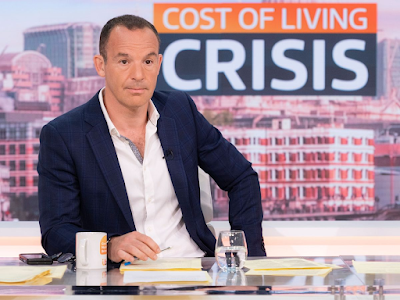
| Martin Lewis (Image: Nottingham Post) |
Is it correct to say that we approached 2022 this time last year with relatively soft optimism? Even though the omicron variant of Covid-19 came to our lives with some government restrictions, there was a sense that it was the beginning of the end - not of the pandemic (that's still around), but end of the fact that we needed to stay at home for an illness that was now under some control. Thank you, science.
However, that optimism was quickly met with sobering fear. While it was fantastic to start going outside without thinking too much about it resulting in spreading disease, there was a sense that nobody would soon be able to afford to go outside. Those industries (hospitality, theatre and retail in particular), who struggled during the height of the pandemic, knew that there would be new challenges on the horizon.
The UK government arguably played down the 'cost of living crisis' to begin with, despite even Conservative backbenchers - who'd support a Tory government's action, come rain or shine - raising concern in the New Year. Westminster's tone changed instantly in February, when Russia's leader Vladimir Putin launched a full-on invasion of Ukraine. Suddenly, predictions that the economy would slow down in 2022, turned into economic experts fearing the worst. The reliance of Russia's and its allies' resources became apparent when UK's then Prime Minister Boris Johnson panicked and imposed severe sanctions on influential oligarchs and Putin's folks. It wreaked havoc, with petrol and diesel prices shooting up, and globally recognised British organisations such as Chelsea FC in limbo.
It wasn't just petrol and diesel prices that rose; gas and electricity had gone up by 54% in April, up by 27% in October and who knows how much it'll increase by over the coming months. Food prices also seen sharp rises. For example, it's difficult to find a bag of pasta for less than 95p right now (previously 45p on average). This time last year, inflation was starting to rise sharply. At the start of 2022, inflation was 5.4%; now it's 10.7%. The government can argue that this is a global crisis, and there's an element of truth in that - prices have gone up everywhere thanks to both the pandemic and Russia's attack on Ukraine. But I can never look beyond the fact that Brexit has made things much more difficult for Britain. Regardless, now-Prime Minister Rishi Sunak and his Chancellor Jeremy Hunt are now leading the country in 2023 with tough austerity measures ahead, flashing people back to a decade previous.
So, it's fair to say that we'll be entering a new year with a lot of turbulence. We're likely to see more workers striking and more people having to choose between heating and eating. Meanwhile abroad, Ukraine continues to be under attack and Iran is going through a major, uncertain transition (which will have global consequences). These will (directly and indirectly), no doubt, impact Britain's economy and to top it all off, as it stands, this time next year, Britons will be thinking about who to vote for in a general election in 2024. Regardless of all the shenanigans to come, the nation can rely on an individual to guide us through these, in the face of my Person of the Year. TIME Magazine perhaps justifiably opted to recognise Ukraine's resilience, but I've opted for Martin Lewis.
Martin Lewis has been in the public eye for a long time. He founded the successful personal finance advice website, Money Saving Expert which always provided handy tips and features like the tax calculator. It gave Lewis his name and he'd start appearing on daytime television with guidance. He also fronted an ITV show which helped opened people's eyes to cheaper alternatives to everyday services such as energy and broadband. He had a charm and passion that made his voice count and it certainly kept major companies competitive.
However, back then, Lewis's guidance didn't seem so mainstream. He was a comfort to those who genuinely needed the help, but not many noticed. It's only over the past 12-15 months where his role has gone from one of a few charismatic 'personal finance expert', to being a genuine lifeline to millions. I don't think even he can count the number of times he's appeared on television and radio in 2022, but never has he wasted an opportunity to treat people like actual humans, providing on-the-spot independent advice and producing some transformational results. He assures people, combining realism and reason, and not making people panic at the same time.
He doesn't claim to be a miracle worker. I'm sure he'd be able to help everyone individually if he could. Yet, what he has done is proven to be the best opposition to the government. When it came to energy regulator, Ofgem, announcing how much firms can up people and business's energy bills by, many of us had long lost faith in Westminster to show any gumption and fight their corner. In fact, the Conservatives spent too much of 2022 attacking each other, and tackle any crises by either shrugging or jetting the Prime Minister off to Kyiv.
Meanwhile, Labour spent much of its year saying either that everything is the Tories' fault, or calling for a general election and pledging to create a state-owned energy company. Neither of these comments or pledges will help people struggling to make ends meet in the short term. The financial packages Westminster approved throughout the year barely had touched the edges. So while politicians twiddle their thumbs, Lewis has taken on that parental role, guiding those worried about their futures how to breathe above deepening waters.
On behalf of everyone, Martin Lewis, thank you.
JSPrice Perception 'Person of the Year' - previous winners:- 2021: Jackie Weaver
- 2020: recurrent TV programmes
- 2019: Colleen Rooney and Dominic Grieve
- 2018: Declan Donnelly
- 2017: Meghan Markle
- 2016: Selection including Tim Peake
Comments
Post a Comment